

How to Tell If Your AC Compressor Is Bad

Last Updated: November 4, 2026
Quick Summary
To tell if your ac compressor is bad, watch for warm air from the vents, a clutch that won't engage, squealing or grinding noises, a burning rubber smell, and visible refrigerant leaks. Confirm it with gauges: a weak ac compressor shows a low side that stays too high and a high side that won't climb. Rule out low refrigerant, a bad clutch, and a blocked condenser before buying parts.
Warm air from the vents is the most common complaint but the least specific sign.
A healthy clutch snaps in with a click and the center hub starts spinning.
Test pressures with the engine held at about 1,500-2,000 RPM and the A/C on max.
Both gauges reading low with a clutch that engages points to low charge, not failure.
A failed compressor can shed metal debris into the condenser, lines, and expansion valve.
Table of Contents
7 Signs Your AC Compressor Is Failing
If your car air conditioning blows warm air and you're wondering how to tell if AC compressor is bad, start with the seven symptoms below. A failing compressor rarely dies without warning, it leaves clues first: weak cooling, odd noises, a clutch that won't engage, or a belt that starts to squeal.
Here are the seven signs, ranked roughly by how early they appear:
Warm air from the vents, even with the A/C on max.
Reduced cooling performance at idle, improving when you rev the engine.
Intermittent cooling that cuts in and out.
A clutch that won't engage or spins constantly.
Squealing or grinding from the engine compartment.
A burning rubber smell under the hood.
Visible refrigerant leaks or oily residue on components.
The first two signs point hardest at the compressor. The rest help confirm it. Below, we walk through each one so you can rule out cheaper causes before you spend money on parts.
Warm Air From the Vents
Warm air from the vents is the most common complaint, but it's also the least specific. A bad compressor can cause it, and so can low refrigerant, a bad blend door, a clogged condenser, or a failed pressure switch. Check the simple things first: is the A/C button engaged, is the blower working, does the air get colder when you drive faster? If cooling improves with engine speed, that often points to a weak compressor or low charge rather than a dead one. Because AC blowing warm air can come from several faults besides the compressor, ruling out basic airflow and control issues first can keep you from misdiagnosing the problem.
Clutch and Belt Problems
The compressor clutch is the electromagnet that locks the pulley to the compressor shaft. When it fails, the compressor never turns, and you get no cold air at all. Watch the pulley with the engine running and the A/C on. A healthy clutch snaps in with a click and the center hub starts spinning.
Belt problems are just as telling. A worn serpentine belt or drive belt can slip, squeal, or shred. If the belt drives the compressor and it's glazed or cracked, the compressor can't do its job. Check belt tension and look for fraying. A belt that squeals only when the A/C kicks on is a strong hint that the compressor is dragging or the belt is loose.
Bad AC Compressor Symptoms: Noise, Smells, and Performance Clues
Noise is where bad AC compressor symptoms get easier to read. A healthy compressor makes a steady hum. A failing one talks to you. Listen for:
Squealing when the A/C engages, often a slipping belt or a seizing clutch.
Grinding or rattling from inside the compressor, a sign of internal wear.
Ticking that speeds up with engine RPM.
Rumbling that gets louder as the cooling cycle runs.
A burning rubber smell is a red flag. It usually means the belt is slipping against a pulley that won't turn freely, or the clutch is overheating. If you smell it, shut the A/C off and check the belt before it snaps.
Performance clues matter too. A compressor on its way out often causes longer cooling cycles, reduced airflow, or intermittent cooling that comes and goes, signs it can't build or hold system pressure. Pair the noise and smell with the cooling behavior, and the picture gets clearer.
How to Test an AC Compressor on a Car: A Safe Diagnostic Sequence
Here's a safe, step-by-step way to test an AC compressor on a car without guessing. Work in order. Each step rules out a cheaper cause before you reach the compressor.
What you'll need: safety glasses, a manifold gauge set, a multimeter, and the vehicle's fuse diagram.
Check the basics. Confirm the A/C is on max, the blower works, and the cabin filter isn't clogged.
Inspect the belt. Look for cracks, glazing, and correct tension. Replace a worn drive belt before testing further.
Watch the clutch. With the engine running and A/C on, confirm the clutch hub spins. No movement means an electrical or pressure fault.
Test the electrical side. Check the fuse, relay, and electrical connection at the clutch. A blown fuse is common and cheap to fix.
Read the pressures. Connect gauges and compare high and low side readings to spec. This is the step most guides skip.
Check vent temperature. Measure vent temperature at the center vent with the system running. Weak cooling with good pressures points away from the compressor.

Watch out: never open the refrigerant circuit or vent gas to the air. Refrigerant must be recovered with approved equipment (the EPA). If you're not set up for that, stop at the pressure test.
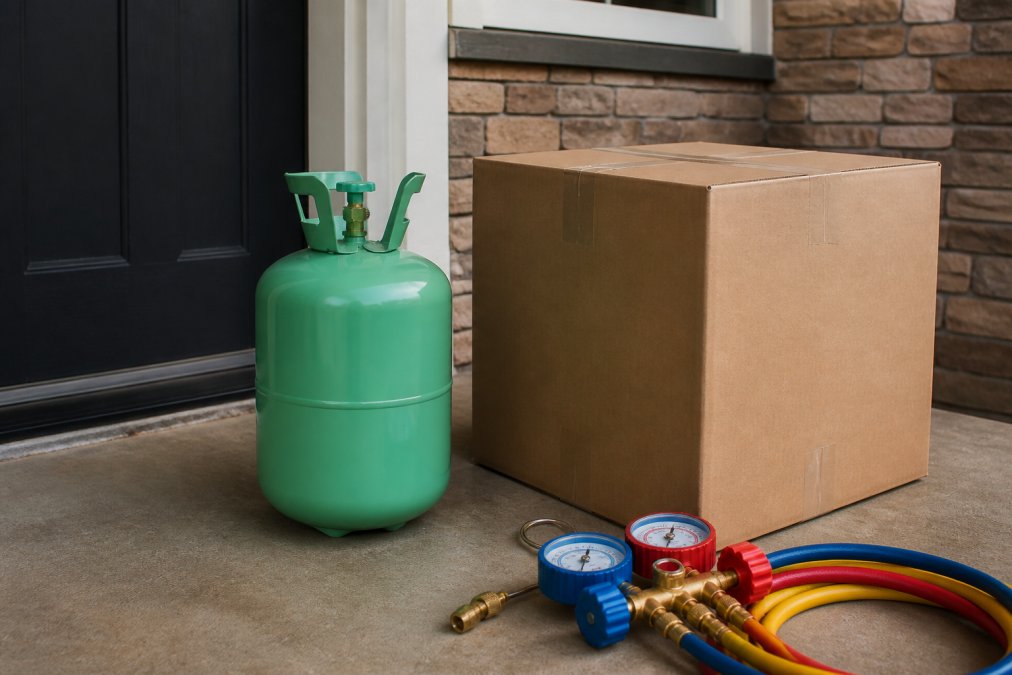
If you're ready to run the pressure test yourself, our 134a charging gauge set with a heavy-duty brass tap gives you a solid seal for accurate readings. For full high and low side diagnosis, a brass manifold gauge set with couplers and a sight glass lets you watch the cooling cycle as it runs.
How to Tell If AC Compressor Is Bad With Gauges
Set up correctly first.
EasyAutoFix
Then read the numbers together:
Gauge Reading | What It Suggests |
Low side too high, high side too low | Weak or failing compressor, it can't build pressure differential |
Both sides low | Low refrigerant charge, likely a leak |
Both sides high | Overcharge, blocked condenser airflow, or a cooling fan fault |
Low side pulls into vacuum | Restriction, often the expansion valve or a blocked orifice tube |
High side climbs then drops sharply, cycling | Low charge or a cycling clutch issue |
Pressures match spec, air still warm | Blend door, heater control valve, or electrical fault, not the compressor |
A compressor that can't build pressure shows a high side that won't climb and a low side that stays too high relative to spec, the classic signature of compressor failure.
Cross-check the electrical side while the gauges are connected. With the A/C commanded on, use a multimeter to confirm battery voltage at the clutch coil connector.
Watch out: refrigerant must be recovered with approved equipment, never vent it to the atmosphere.
If you're ready to run the pressure test yourself, our 134a charging gauge set with a heavy-duty brass tap gives you a solid seal for accurate readings.
How to Know If Compressor Is Bad or Needs a Recharge
This is the question that saves people the most money.
Start with the clutch. With the engine running and A/C on max, watch the clutch hub.
Next, compare cooling at idle versus at speed. A system that's just low on refrigerant often cools poorly at idle but improves when you rev the engine and raise compressor speed.
Then read the pressures against the patterns above. Both sides low with a clutch that engages and runs points to low charge, not a failed compressor.
Rule out the non-compressor causes of warm air before you commit:
Low refrigerant charge, both gauges low, clutch cycling, slow fade over months.
Failed clutch or relay, clutch never engages, no voltage at the coil, or voltage present but no pull-in.
Blocked condenser, high side runs high, cooling improves when you spray water on the condenser or the fans kick on.
Blend-door or heater-control fault, pressures look normal but vent temperature stays warm; the A/C is working but the air isn't being routed through the evaporator.
Bad pressure switch or control module, scan tool shows no compressor command even though the system is charged.
A slow fade with low pressures on both sides is the strongest recharge signal.
Watch out: stop leak is a band-aid, not a repair.
Repair Scope, Contamination Risks, and DIY Limits
Replacing a compressor is a bigger job than most people expect. When a compressor fails internally, it can shed metal and debris into the A/C system, which travels through the condenser, lines, and expansion valve.
That's why a proper repair usually includes:
Flushing or replacing the condenser and lines.
Replacing the receiver-drier or accumulator.
Adding the correct amount and type of oil.
Pulling a vacuum and recharging to spec.
DIY limits are clear. You can check fuses, relays, belts, and pressures safely. You can top up a low charge. But recovery, flushing, and evacuation need equipment most home techs don't own. If the job is beyond your DIY limits, contact Best Refrigerant for product support and order assistance.
Order the Right Refrigerant for Your Diagnosis
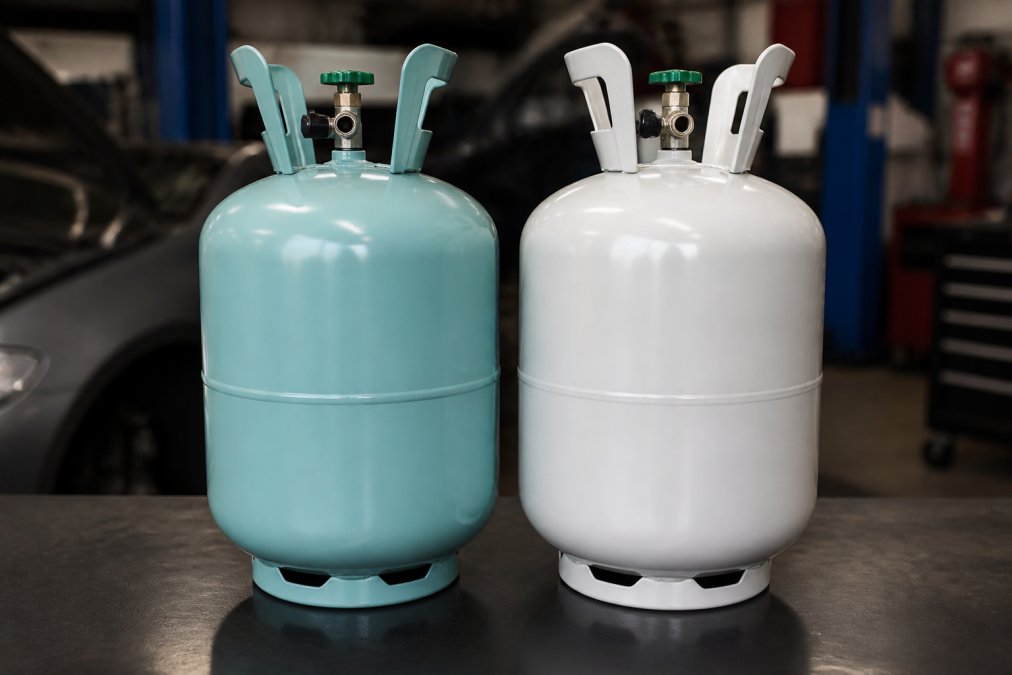
Before you order anything, confirm which refrigerant your vehicle uses. Many older cars run R134a, while newer models often use R1234yf. They are not interchangeable. Our guide on R134a vs R1234yf for automotive AC breaks down the difference so you order correctly the first time.
Once you know the type, Best Refrigerant offers a wide variety of refrigerant types, including hundreds of products in stock. Pricing depends on quantity, dates, and delivery, so visit the Best Refrigerant website for current prices or a quote.
Diagnosing a bad compressor is about ruling out the cheap causes first, reading pressures correctly, and knowing when to stop. Confirm the refrigerant type for your vehicle before you order.
Frequently Asked Questions
How can I check if my AC compressor is bad?
Start by running the AC and checking vent temperature with a thermometer. If the air stays warm, look at the compressor pulley with the engine running and AC on: the clutch should engage and the center hub should spin. Listen for grinding or squealing, inspect the serpentine belt for wear, and check for oil residue around fittings. If the clutch never engages, test the fuse, relay, and electrical connection before assuming the compressor is dead.
How to tell if AC needs recharge or new compressor?
A recharge fixes a system that is low on refrigerant but still mechanically sound. A bad compressor usually shows up as clutch failure, unusual noise, or pressure readings that stay flat when the compressor engages. Connect gauges: if static pressure is low and the system holds a vacuum after recovery, it likely needs a recharge and leak repair. If the compressor clutch will not engage or pressures do not change when it does, the compressor is the likely culprit.
What noises does a bad AC compressor make?
A failing compressor often produces grinding, rattling, ticking, or rumbling from the engine compartment when the AC is on. Squealing usually points to a slipping or worn serpentine belt or a seized clutch. A burning rubber smell can come from a belt dragging on a locked pulley. If the noise stops when you turn the AC off, the compressor or clutch is the prime suspect and should be tested with gauges before replacement.
Can AC pressure gauges tell me if the compressor is bad?
Yes, when used correctly. With the engine running and AC on max, a healthy compressor produces a clear pressure split between low and high sides. Readings that stay equal, high side that never rises, or low side that pulls into a vacuum can indicate internal compressor failure. Always verify ambient temperature and compare to the manufacturer's pressure chart, and rule out a low refrigerant charge before condemning the compressor.
Warm air and a noisy clutch don't have to mean a costly guess. At Best Refrigerant, we stock the gauges, refrigerant, and stop-leak kits that make diagnosis and repair straightforward, with same-day shipping on weekday orders and careful packaging so your order arrives ready to use. Get started with Best Refrigerant and diagnose your A/C system with the right tools in hand.

Comments