

Automotive and HVAC Refrigerant Supplier: 2026 Buyer's Guide

Table of Contents
Last Updated: September 23, 2026
What to Look For in an Automotive and HVAC Refrigerant Supplier
Choosing the right automotive and HVAC refrigerant supplier comes down to three things: stock depth across legacy and current refrigerants, shipping speed with packaging that survives the trip, and verifiable EPA compliance. This guide from Best Refrigerant breaks down each factor so you can buy with confidence in 2026.
Stock Depth and Legacy Refrigerant Availability
Legacy refrigerants are where most suppliers fail. R-22 is phased out for new equipment but still needed for the thousands of older systems in service, and R-407A, R-438A, and R-422D remain in demand for commercial refrigeration retrofits.
Shipping Speed, Packaging, and Delivery Area
Same-day shipping only matters if it covers your address. Ask two questions before you commit: what is the cut-off time for weekday orders, and how are cylinders packed for transit?
R-134a vs R-1234yf Compatibility: Which Refrigerant Fits the Job
The answer is simple: use what the system was designed for. R-134a serves most vehicles built before roughly 2015, while R-1234yf is required in newer vehicles built to meet lower global warming potential (GWP) standards. They are not interchangeable without a proper retrofit.
Refrigerant | Typical Use | GWP | Cylinder Options |
R-134a | Vehicles pre-2015 | ~1,430 | 12 oz cans, bulk |
R-1234yf | Newer vehicles | <1 | 8 oz cans, 10 lb+ |
R-410A | Residential HVAC | ~2,088 | 25 lb cylinders |
R-22 | Legacy HVAC (service) | ~1,810 | Reclaimed only |
Why R-1234yf Costs More Than R-134a
R-1234yf costs more because it is a newer, patented synthetic refrigerant with a far lower GWP, and production capacity is still catching up to demand. The chemistry is more expensive to manufacture, and licensing adds to the price.
Technical Specifications That Actually Matter at the Manifold
GWP alone does not tell you whether a refrigerant will work in a given system. Four specifications drive the decision:
Operating pressure. R-1234yf runs at slightly lower pressures than R-134a for the same cooling capacity, which is why a system designed for one will not perform correctly on the other without recalibration. R-410A, by contrast, runs at roughly 50 to 70 percent higher pressures than R-22, a difference that dictates hose, gauge, and recovery equipment ratings.
Lubricant compatibility. R-134a and R-1234yf both use PAG (polyalkylene glycol) oil, but the specific PAG formulation differs between the two. R-410A uses POE (polyol ester) oil. Cross-contaminating lubricants is one of the most common causes of premature compressor failure.
Charge behavior. R-134a and R-1234yf are both single-component refrigerants, so they can be charged as a liquid or vapor. Blends like R-410A and R-407C are zeotropic, they must be charged as a liquid or the blend fractionates and the system loses capacity.
Temperature glide. Single-component refrigerants have zero glide. Zeotropic blends can have glide of several degrees, which affects how you set superheat and subcooling targets.
Retrofit Rules of Thumb
A true retrofit is not a top-off. When converting an R-134a system to R-1234yf, the standard practice is to recover the old charge, replace the receiver-drier and any seals rated for the old refrigerant, flush the lines, and refill with the correct PAG oil and charge weight. Skipping any step is how shops end up with repeat comebacks.
Key Takeaway Match the refrigerant to the system, not the other way around. Pressure, oil, and glide, not just GWP, determine whether a charge will work.
Matching Refrigerant to System Type
System | Refrigerant | Oil Type | Charge Method |
Pre-2015 vehicle A/C | R-134a | PAG | Liquid or vapor |
2015+ vehicle A/C | R-1234yf | PAG (different spec) | Liquid or vapor |
Residential/light commercial A/C | R-410A | POE | Liquid only |
Legacy residential A/C | R-22 (reclaimed) | Mineral or POE | Liquid or vapor |
Commercial refrigeration retrofit | R-407A, R-448A, R-449A | POE | Liquid only |
If you are unsure which grade a system takes, check the nameplate on the outdoor unit or the underhood A/C label before you pull a vacuum. Guessing is how warranty claims get denied.
EPA 609 Certification Requirements for Buying Refrigerant
EPA Section 609 certification is required to purchase and handle motor vehicle air conditioning refrigerants. If you service automotive A/C, you need Section 609. If you work on stationary refrigeration and HVAC equipment, you need Section 608.
Section 608 vs Section 609: Who Needs What
Section 608 covers stationary refrigeration and air conditioning technicians. Section 609 covers motor vehicle air conditioning. Many technicians who do both hold both certifications.
Watch Out Buying refrigerant without the proper certification, or from a supplier that does not verify it, exposes you to federal penalties and risks contaminated product entering a customer's system. Always confirm EPA compliance before ordering.
How to Handle Refrigerant Cylinders Safely
Safe handling starts with storage and ventilation. Store cylinders upright in a well-ventilated area away from heat, keep valves closed and capped, and never fill a cylinder beyond its rated capacity. Always review the safety data sheet (SDS) before working with an unfamiliar refrigerant.

Storage, Ventilation, and SDS Basics
A few habits prevent most incidents:
Store cylinders upright and secured against tipping
Keep them below the temperature limits on the label
Never use a cylinder as a roller or support
Read the SDS for every new refrigerant before charging
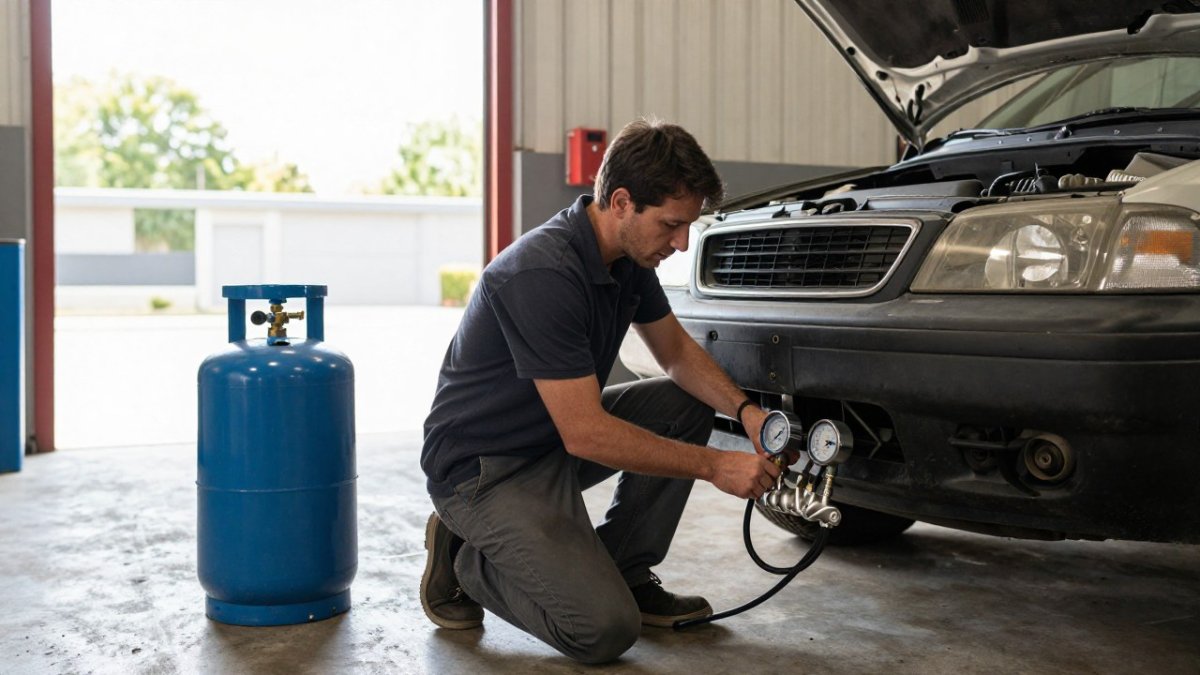
Use a manifold gauge set and pressure testing to verify system charge
The OSHA guidance on compressed gas cylinder handling reinforces what experienced techs already know: secure the cylinder, ventilate the space, and never tamper with safety valves.
Bulk Pricing and Wholesale Options for Small Shops
Bulk pricing rewards volume, but small shops can still buy smart. The trick is matching cylinder size to your actual usage so you are not paying for refrigerant that sits on the shelf or, worse, buying retail cans when a 25 lb cylinder would cost less per pound.
Pro Tip Track your refrigerant usage for one month before committing to bulk. If you are going through more than a few cans a week, a 25 lb cylinder almost always beats retail cans on cost per pound, and it reduces packaging waste.
Refrigerant Recovery, Recycling, and Leak Troubleshooting
Recovery and recycling are not optional extras; they are legal and practical requirements. Under EPA rules, technicians must recover refrigerant rather than vent it, and recovered refrigerant can often be recycled and reused if it meets purity standards. Most buying guides stop at the sale, this section covers what happens after the cylinder is opened, which is where the real liability and cost savings live.
Recovery Equipment and the Recovery Cylinder
Recovery requires a dedicated recovery machine rated for the refrigerant you are pulling, plus a recovery cylinder that is clearly labeled and never used for anything else. Two rules matter more than any other:
Never mix refrigerant types in one recovery cylinder. A cylinder containing R-134a and R-1234yf together is not reclaimable and may not be accepted by a reclaimer. It becomes hazardous waste.
Never fill a recovery cylinder past 80 percent of its water capacity. Liquid refrigerant expands with temperature, and an overfilled cylinder can hydrostatic-lock and rupture. Most recovery cylinders have a float switch or a marked fill line for exactly this reason.
Recycling, Reclaiming, and Purity Standards
"Recycled" and "reclaimed" are not the same thing, and the distinction matters for both compliance and resale:
Recycled refrigerant is cleaned on-site, typically by oil separation and moisture removal, and reused in the same equipment or another unit owned by the same owner. Purity is verified against the AHRI Standard 700 specification.
Reclaimed refrigerant is reprocessed by an EPA-certified reclaimer to meet AHRI 700 purity, chemically analyzed, and issued a batch certificate. Only reclaimed refrigerant may be sold to a different owner.
Recordkeeping You Are Required to Keep
Section 608 requires technicians and shops to maintain records of refrigerant purchases, recovery, and disposal. In practice, that means:
Keep invoices for every cylinder purchased.
Log the date, quantity, and type of refrigerant recovered from each appliance.
Retain disposal or reclaimer receipts for refrigerant sent off-site.
Keep these records for at least three years.
Leak Detection: Find It Before You Recharge
Leaks are the reason most systems lose charge in the first place. Chasing a leak with repeated top-offs wastes refrigerant and money, and on systems above the EPA leak-rate threshold, uncorrected leaks trigger additional reporting and repair obligations. A proper leak detection routine saves both.
Common leak points to check:
Schrader valves and service ports
O-rings and seals at connections
Condenser and evaporator coils
Line fittings and flare connections
Compressor shaft seals and Schrader cores on service valves
Work the system in this order:
Visual and UV dye inspection first, dye traces are the fastest way to find slow leaks on coils and fittings.
Electronic leak detector sweep along every joint, valve, and coil face. Move the probe slowly; a fast sweep misses small leaks.
Nitrogen pressure test to confirm the repair holds before pulling a vacuum.
Evacuation to 500 microns and a standing vacuum test to confirm no moisture or non-condensables remain.
Recharge by weight using the nameplate charge, not by gauge pressure alone.
Watch Out Venting refrigerant to atmosphere is illegal for the refrigerants covered under Section 608 and Section 609. Recover first, then diagnose. A top-off without a leak repair is a callback waiting to happen.
What This Means for Your Supplier Choice
Ask any supplier two questions before you buy: do you stock recovery cylinders and machines, and can you provide reclaimer certificates on reclaimed product? If the answer to either is no, you will be sourcing those elsewhere.
Choosing a Refrigerant Supplier You Can Rely On
A supplier that stocks legacy and current refrigerants, ships same-day, verifies EPA compliance, and packs cylinders to survive transit is worth more than a few dollars saved elsewhere.
What to Check | Why It Matters | Red Flag |
Legacy stock | Keeps older systems serviceable | "Special order only" |
Shipping cut-off | Same-day matters for emergency jobs | No stated cut-off |
EPA verification | Protects you legally | Never asks for cert |
Packaging method | Prevents damaged cylinders | No packaging details |
Bulk pricing | Lowers per-job cost | Retail only |
Frequently Asked Questions
How do I verify if a refrigerant supplier is legitimate and EPA-compliant?
Check that the supplier sells only EPA-accepted refrigerants and can provide a Safety Data Sheet (SDS) for every product. Legitimate sellers ship cylinders with intact tamper seals, correct product labels, and lot numbers. Ask whether they require proof of Section 608 or Section 609 certification before selling restricted refrigerants. If a price looks far below market, or the seller cannot produce documentation on request, treat it as a red flag and buy elsewhere.
What is the EPA certification requirement for purchasing refrigerants?
Under EPA rules, technicians who service stationary HVAC and refrigeration equipment must hold Section 608 certification. Technicians who work on motor vehicle air conditioning systems need Section 609 certification. Suppliers are required to verify certification before selling regulated refrigerants. Small cans of R-134a sold for motor vehicle use are exempt from the sales restriction, but proper handling and recovery rules still apply. Keep your certification card current and available when ordering.
Why is R-1234yf so expensive compared to R-134a?
R-1234yf has a global warming potential of less than 1, while R-134a sits around 1,430. That low GWP makes R-1234yf the refrigerant of choice for newer vehicles, but manufacturing capacity is still smaller than the decades-old R-134a supply chain. Licensing, patents, and the cost of producing a hydrofluoroolefin compound add to the price. At Best Refrigerant, a single 8 oz can of Arctic Edge R-1234yf runs $29.99, while a 12 oz can of Harp R-134a costs $12.00.
Is it safe to buy refrigerant cylinders online?
Yes, when the supplier packs cylinders correctly and ships through carriers that accept compressed gas. Look for suppliers that use reinforced boxes, keep cylinders upright during transit, and provide tracking. Inspect every cylinder on arrival for dents, valve damage, or a broken tamper seal. If a cylinder arrives damaged, do not use it. Store cylinders below 125°F, away from direct sunlight, and never in a closed vehicle on a hot day.
Sourcing refrigerant should not mean juggling three vendors or gambling on packaging. Best Refrigerant gives you hundreds of products in stock, same-day shipping on weekday orders, and careful packaging so cylinders arrive ready to use, backed by access to a wide variety of refrigerant types for both automotive and HVAC work. Get started with Best Refrigerant and keep every system charged with the right refrigerant, on time.


Comments